Chapter one: The pool years (2013–2017)
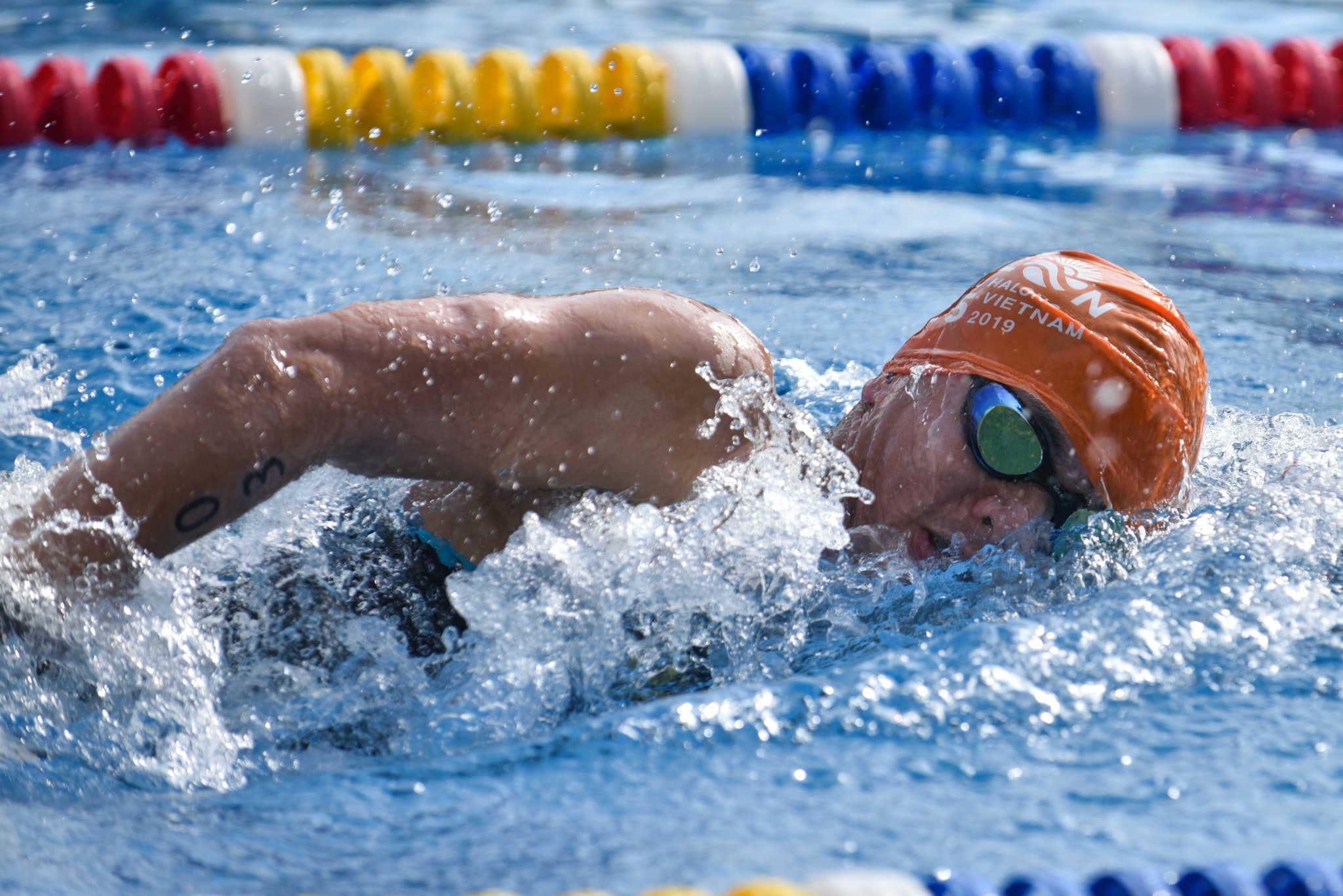
I made the national swim team at 16. Six months later I was on a plane to Naypyidaw for my first SEA Games. I won gold in the 1500m freestyle the same week I turned seventeen.
Two years later, in Singapore, I defended the title with a new SEA Games record — 15:31.6, almost six seconds under the old mark. I still hold four Vietnamese national records from that era: the 800m freestyle, the 1500m freestyle, the 4×100m freestyle relay, and the 4×200m freestyle relay. I capped the chapter with silver at SEA Games 29 in Kuala Lumpur and a triple gold at the Asian Age Group Championships — 50m fly, 100m fly, 400m IM, plus an Asian age-group record in the 1500m free.
Then my back went.
Chapter two: The Grab years (2017–2019)
I retired from elite swimming at 21 with a herniated disc and L4/L5 spondylolisthesis. No contract, no plan, no clear next move. I enrolled at the Ho Chi Minh City University of Physical Education and Sports and started working.
Tuition, rent, food, gear — I paid for all of it by driving Grab between swim lessons. Private 1-on-1s in the morning, university classes through the day, personal-training sessions at night, and Grab rides in the gaps between. On good weeks I coached four different pools in four different districts and still had to take evening rides home.
Nobody was watching. Nobody was sponsoring. That was the point — I had to prove to myself that I could build something without the federation, without the medals to live off. That period became the spine of everything that came after. Every coaching decision I make now is filtered through what I needed as a broke 22-year-old with a bad back who still wanted to be a professional athlete.
Chapter three: The triathlon pivot (2019 → now)
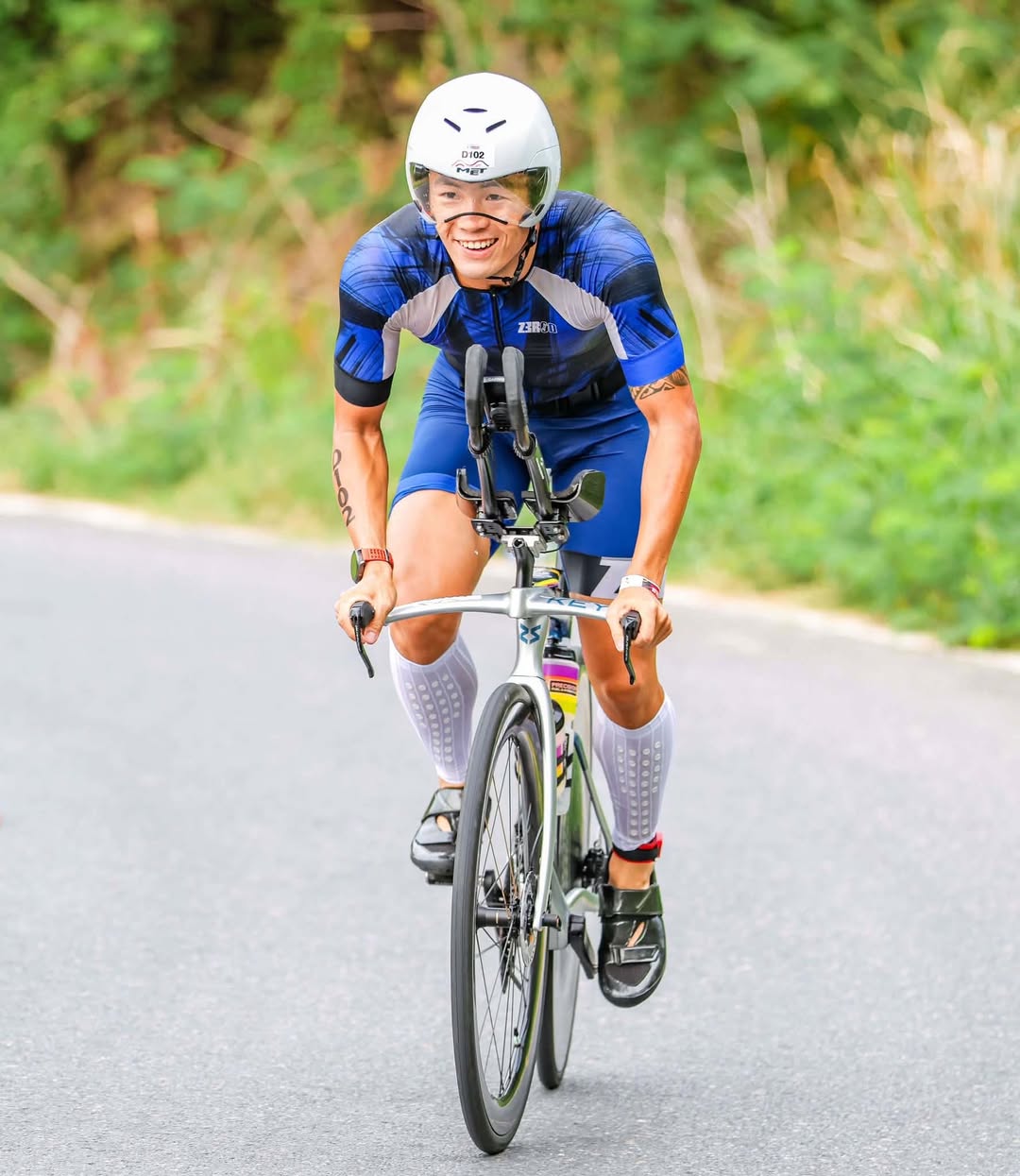
I entered my first triathlon in 2019 — Sunset Bay, Ha Long — and won. I wrote a 983-word email to Sunrise Events Vietnam in 2023 asking them to fund a long-term training camp in Phuket under Jürgen Zäck — five-time IRONMAN Europe (Roth) winner, former IRONMAN-distance world record holder, and head coach at Thanyapura. "If you don't sponsor me, I'll still go," I wrote. They sponsored me.
Ten-plus months at Thanyapura reshaped my run — the weakest of the three disciplines — and produced three consecutive Vietnamese national triathlon records:
- 2023 — 1:05:02 (sprint, national championship)
- 2024 — 1:00:58 (Quang Ngai)
- 2025 — 1:00:36 (Tam Chuc) · national record
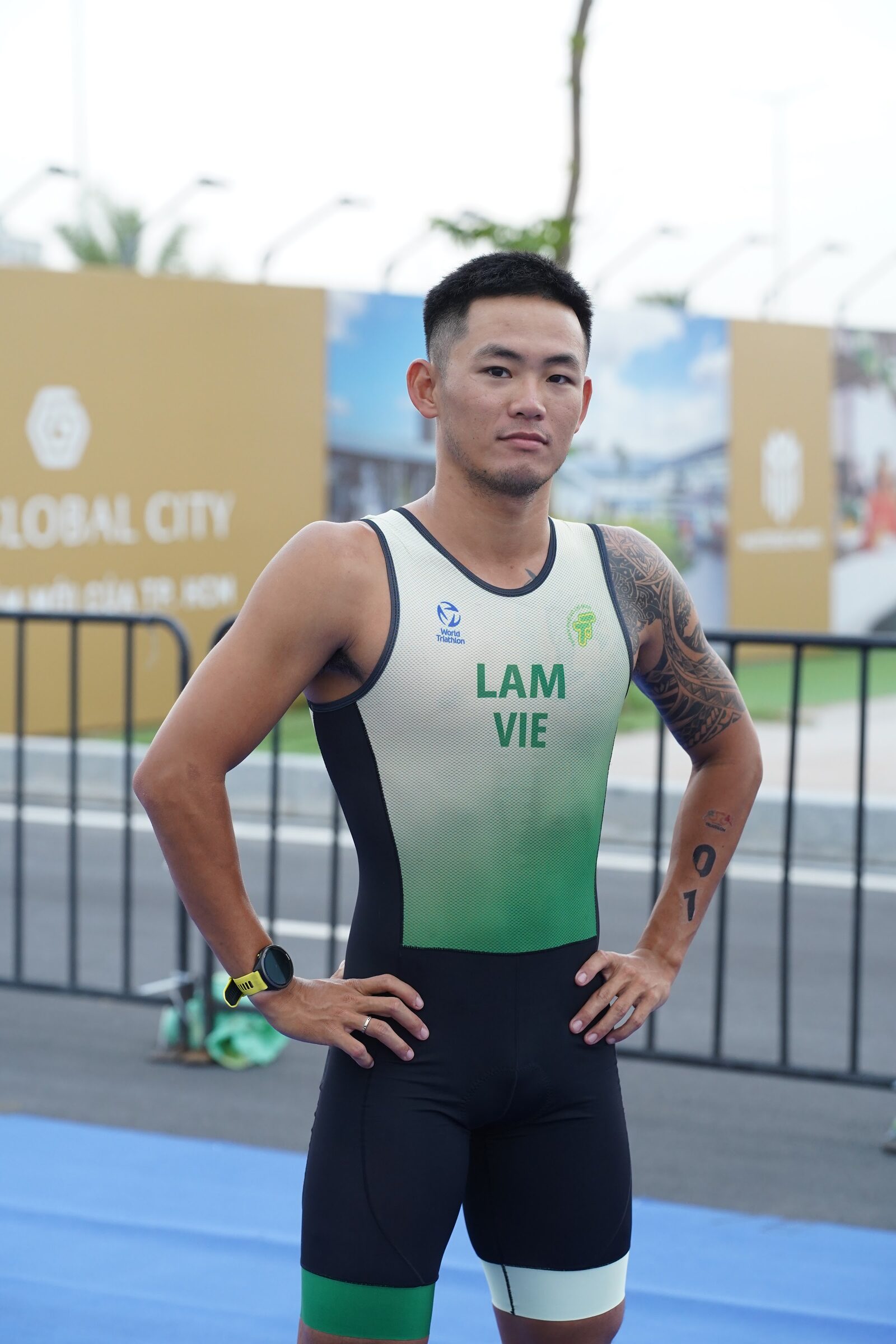
At SEA Games 33 in Rayong on 19 December 2025 I finished fifth overall in 57:15 — breaking my own national record by three minutes and forty-one seconds, and turning in the fastest 750m swim leg of the entire field at 8:53.
In the open-water circuit I have three OCEANMAN titles: Cam Ranh 10km in 2024 (1:58:48 · tournament record, field of 1,000+ athletes from 21 countries), Phang Nga 5km in 2025 (1:06:54 · overall and 20–29 age-group champion), and Kota Kinabalu 10km in Malaysia on 5 July 2026 (2:31:04 · overall champion in tough open water). I also served as ambassador for DNSE Aquaman Vietnam alongside Nguyễn Thị Ánh Viên and actress Khả Ngân.
On 10 May 2026 I made history at the inaugural IRONMAN 70.3 Vietnam in Đà Nẵng — finishing 2nd overall in 4:13:44, the fastest IRONMAN 70.3 performance ever recorded by a Vietnamese athlete. I led out of the swim in 22:44 (1st AG men split) and held the front through both transitions to take the overall podium in Vietnam's first-ever IRONMAN race weekend. Full race report →
What I do now
I run Khỉ Biết Bơi — "the monkey that can swim" — a learn-to-swim school in Ho Chi Minh City that now teaches hundreds of adults and children a year. I coach the VNG Swim-Bike-Run club. I take on a small number of 1-on-1 triathlon athletes in person and a larger cohort remotely through TrainingPeaks. Training camps in Da Nang, Nha Trang, Vung Tau and Cam Ranh round out the year.
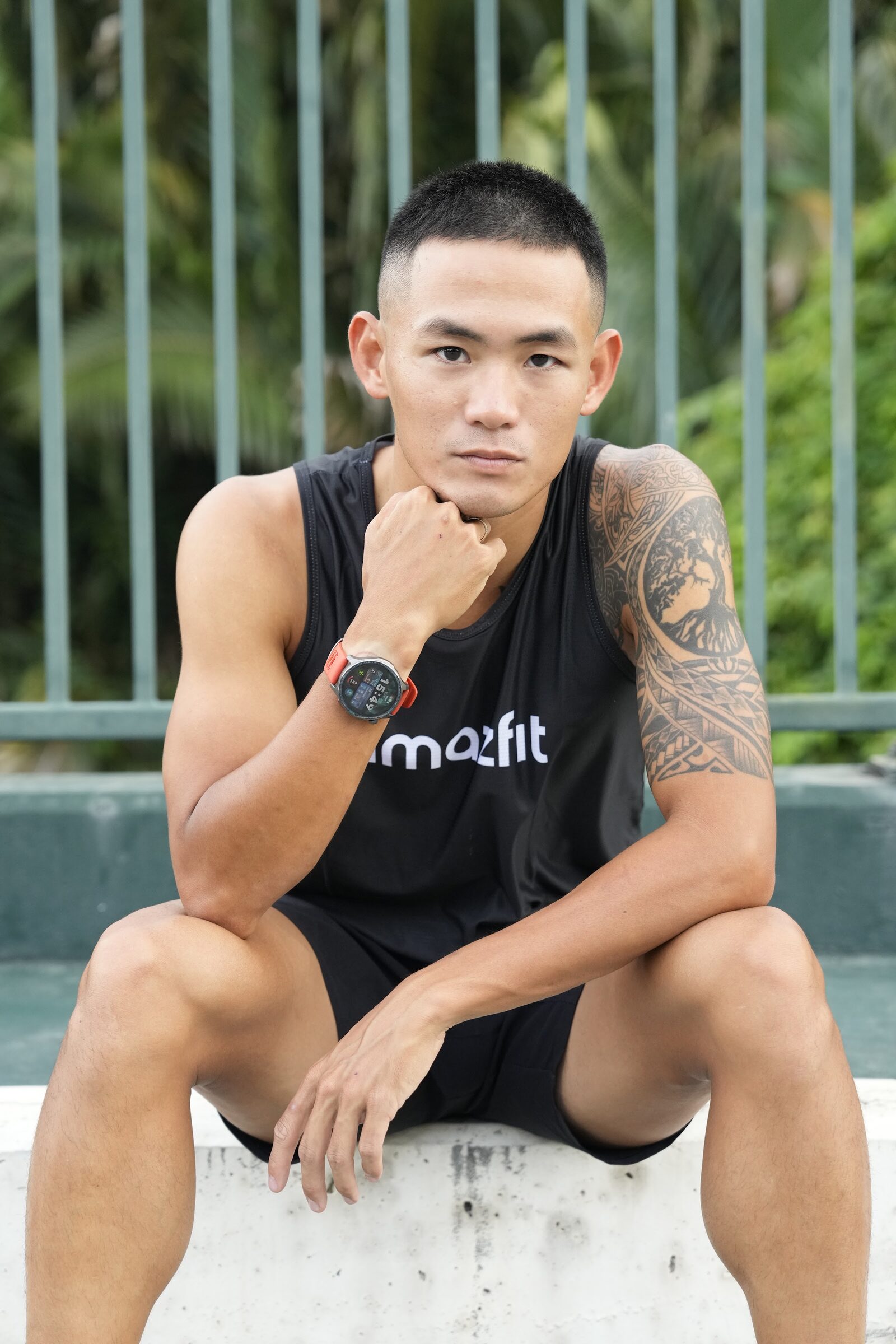
My sponsors — Sunrise Events Vietnam, Nike (via ACFC), Amazfit, Lecka, ACC Clinic and the HCMC Swimming Club — back the racing side; the coaching side is self-funded and deliberately so. I want the Vietnamese age-grouper who writes to me in broken English to get the same plan I'd build for a sponsored athlete. The philosophy works both ways or it doesn't work.
Training philosophy
Four principles, learnt the long way:
1. Strength before speed. Every programme opens with aerobic base and injury-proofing — a lesson a herniated disc taught me more than any coach did. Speed is what you get for free later, once the body can absorb it.
2. Data-honest feedback. Heart-rate caps. Pace zones. Power thresholds. RPE. You learn what your own numbers mean, and then we write the next block together. No mystery coaching.
3. Swim as the unfair advantage. Most Vietnamese triathletes lose their race in the swim leg. I teach pool-grade stroke mechanics so the opening leg becomes a weapon — not a tax.
4. Train where you race. Da Nang heat. Cam Ranh salt water. 5 a.m. starts. The plan rehearses the real race, not a textbook version of one.
What's next
The short-term goal: build the coaching ecosystem — school, camps, online, content — that Vietnam's endurance sport has never had. The longer-term goal, still unfinished: qualifying distance for an Olympic triathlon.
Last updated: May 2026 · HCMC